

JustWin
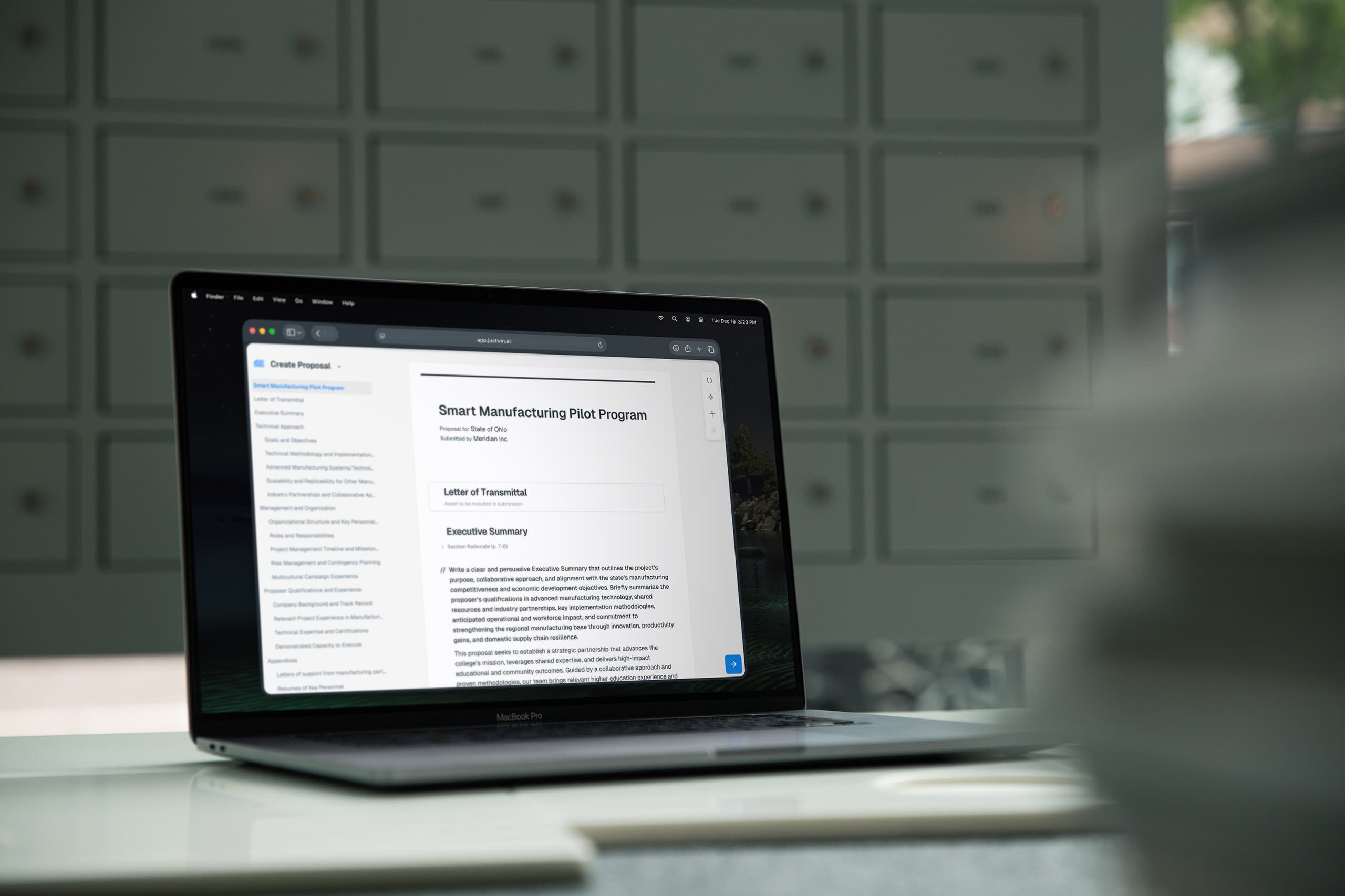
JustWin is AI for public sector sales, helping more American companies win government contracts. It sources and qualifies solicitations salient to the customer, then helps teams draft winning proposals. Over the last year I've worked with their team as an acting founding designer, redesigning the core product, building a design system, shipping new features, and writing a bit of front-end code.
- Role
- Acting Founding Designer
- Brief
- Launch
- Disciplines
- Web App, Design System, UI Engineering
Vision
Vision
Vision
Create a platform which makes cutting-edge AI feel effortlessly usable by any government contractor
The space is moving fast. Legacy tools have trust but dated interfaces. Foundational models improve every month. Startups are racing to build in between. JustWin's edge is domain expertise—they talk to customers constantly, know how the work actually gets done, where the pain is sharpest.
The question: how to make that advantage visible and build durable value when the underlying AI keeps getting better and cheaper.
I came in as a bridge between go-to-market and AI engineering. The goal was to encode contracting expertise into the product, shape workflows that reflect how this work actually happens, and make complexity manageable for people who don't read Techmeme—while building enough trust to retain customers and move upmarket.
Redesign
Redesign
Ground-up Redesign
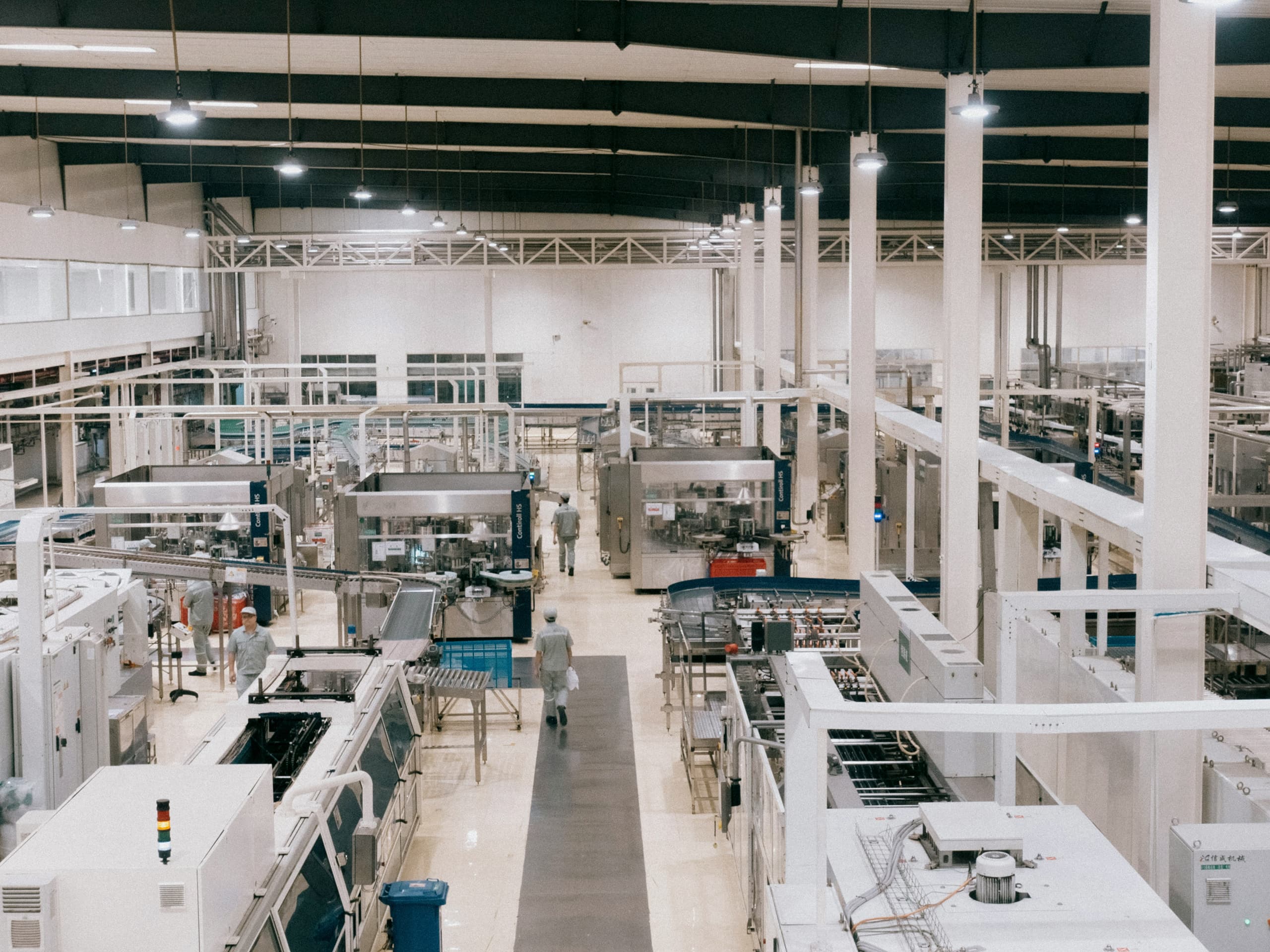
A ground-up redesign that reflected the quality of the product behind the curtain
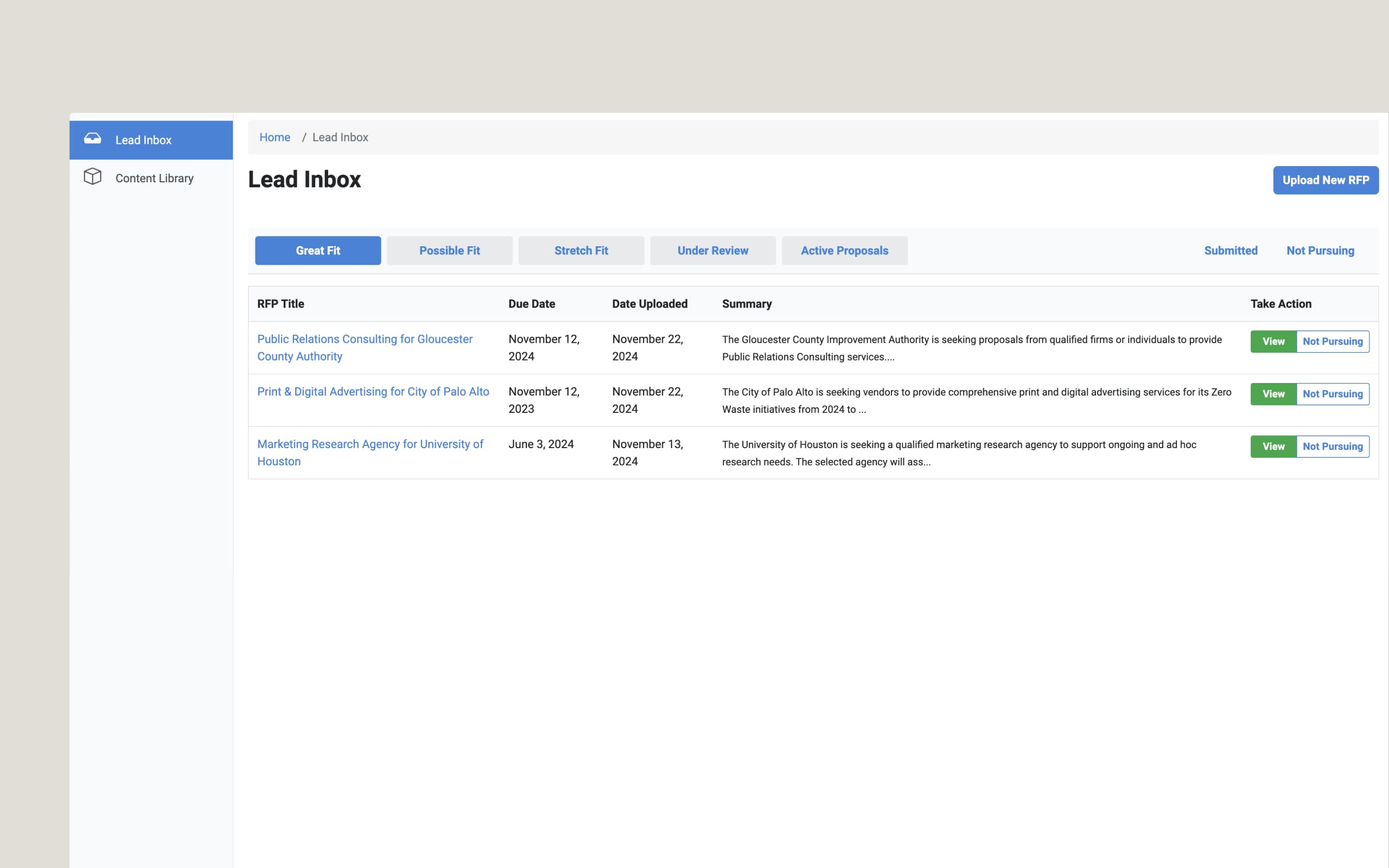
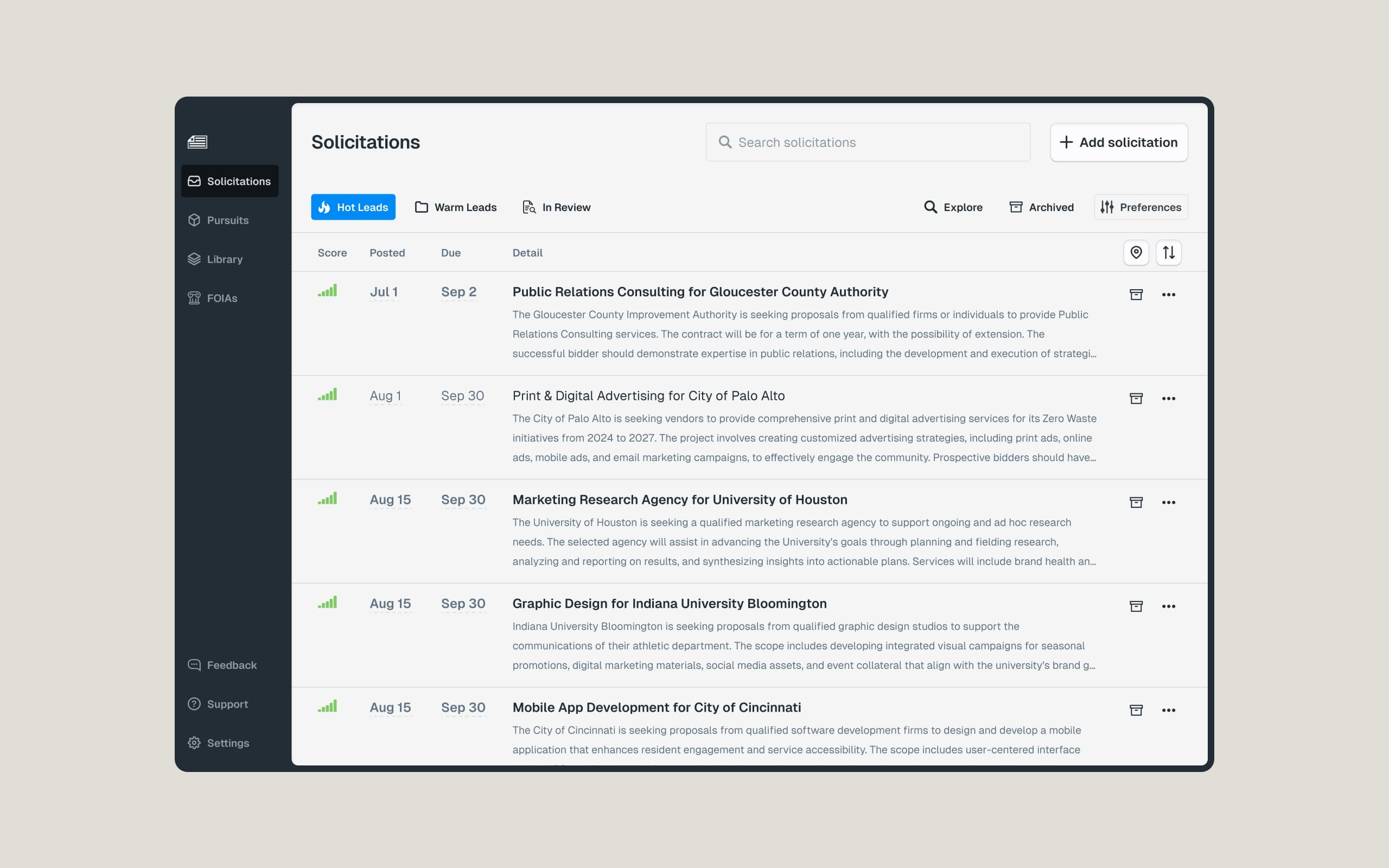
When I started, JustWin had a working product with paying customers. But the interface had not kept pace with the technology behind it. It didn’t yet impute the quality of what the team had actually built.
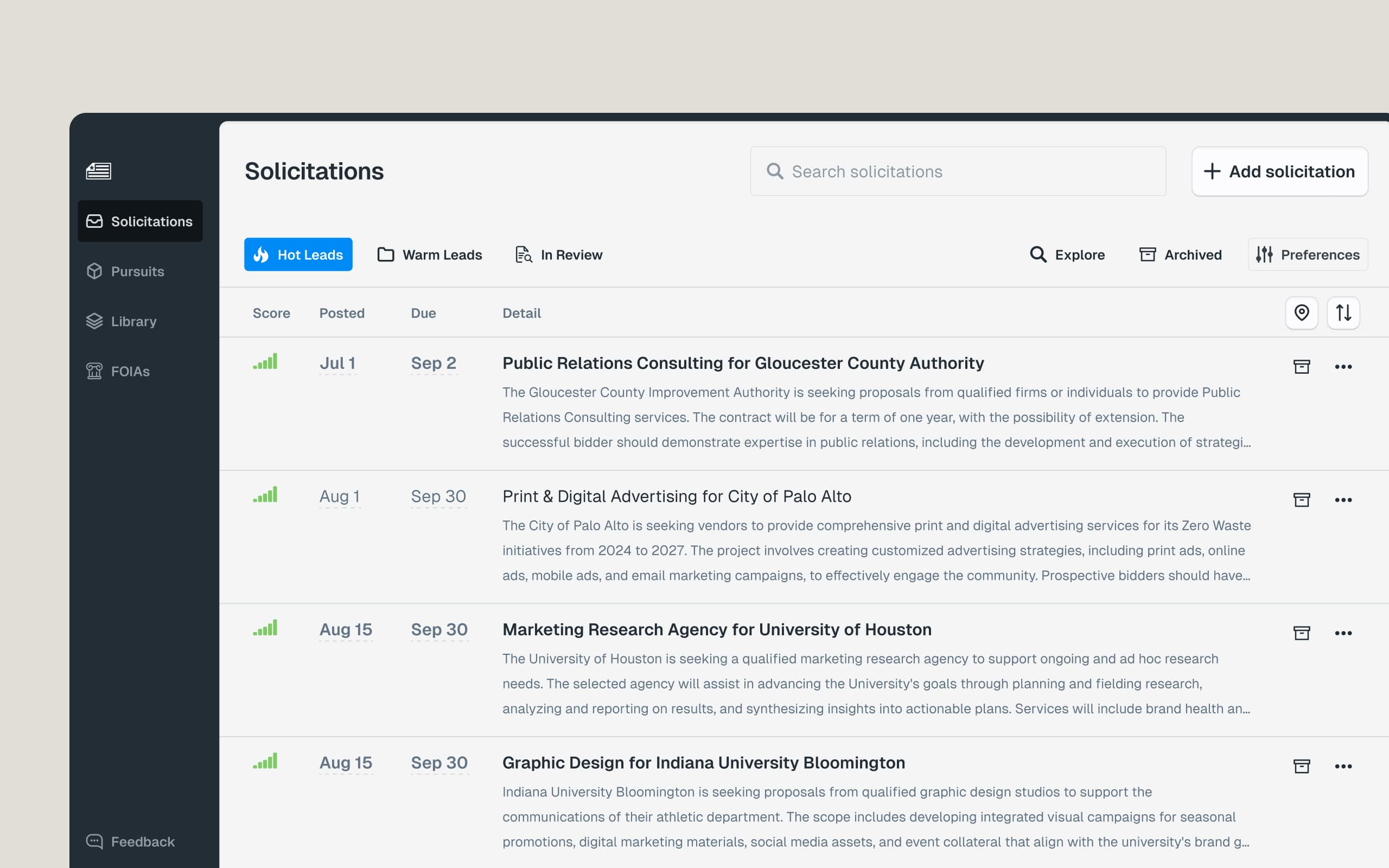
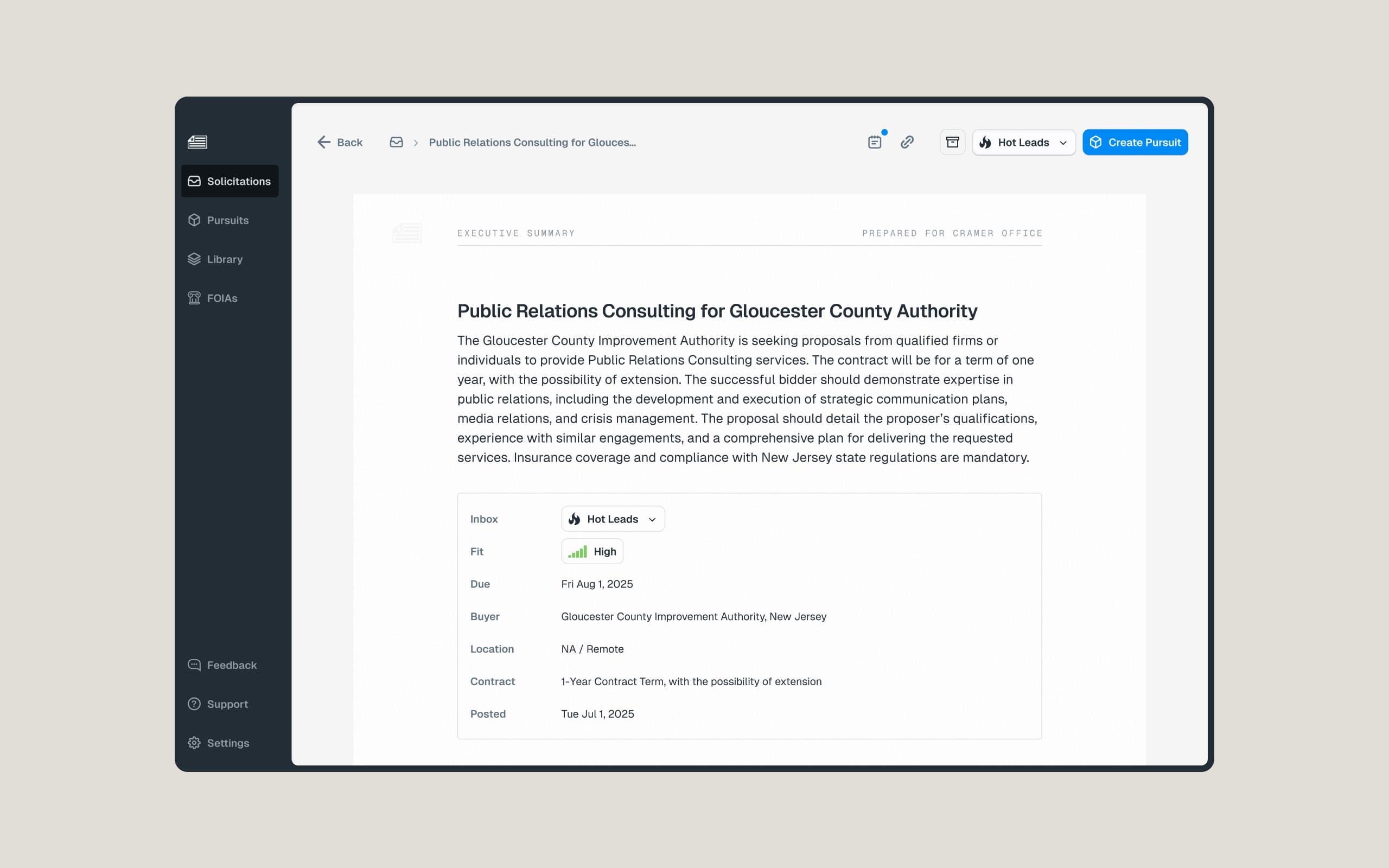
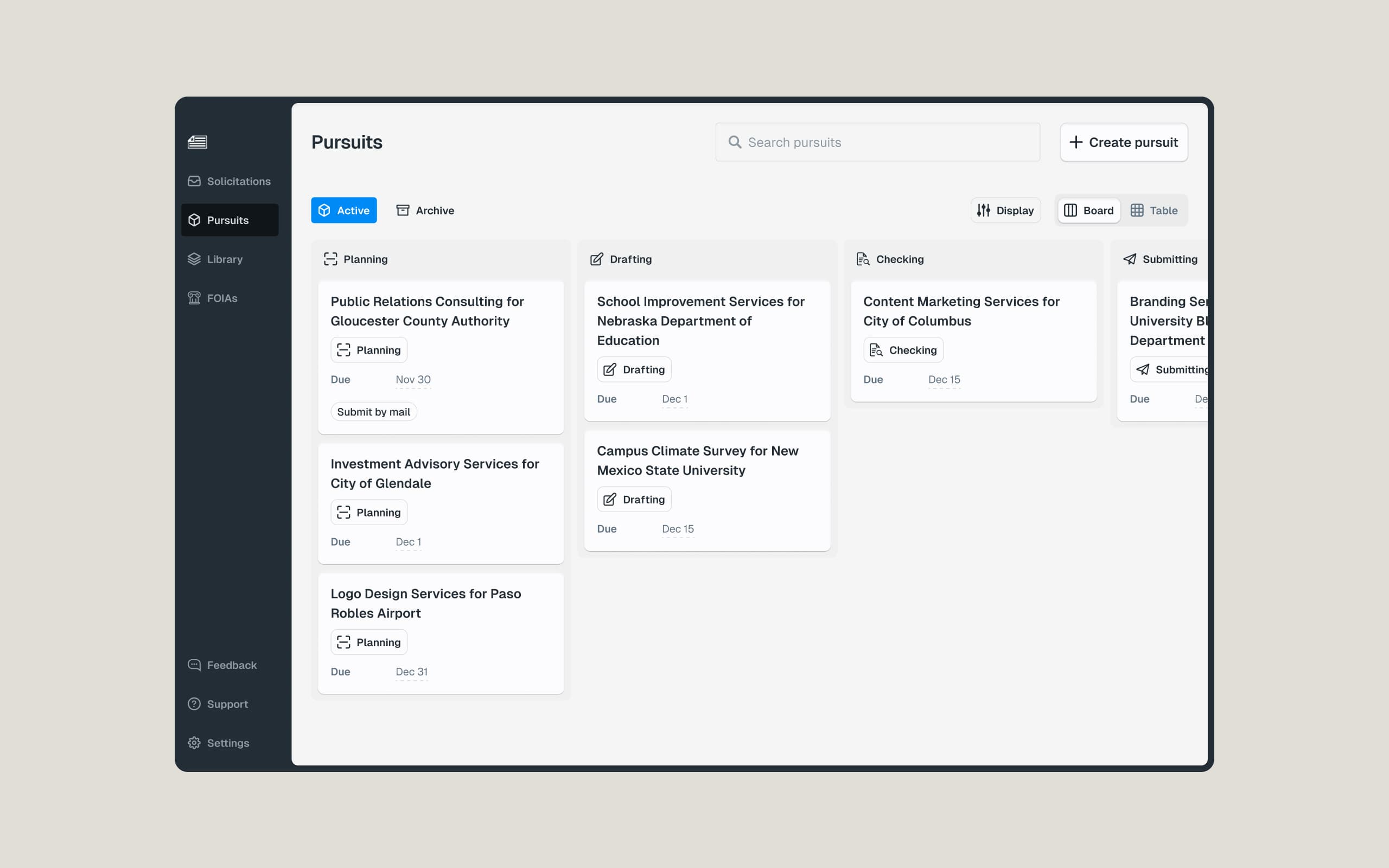
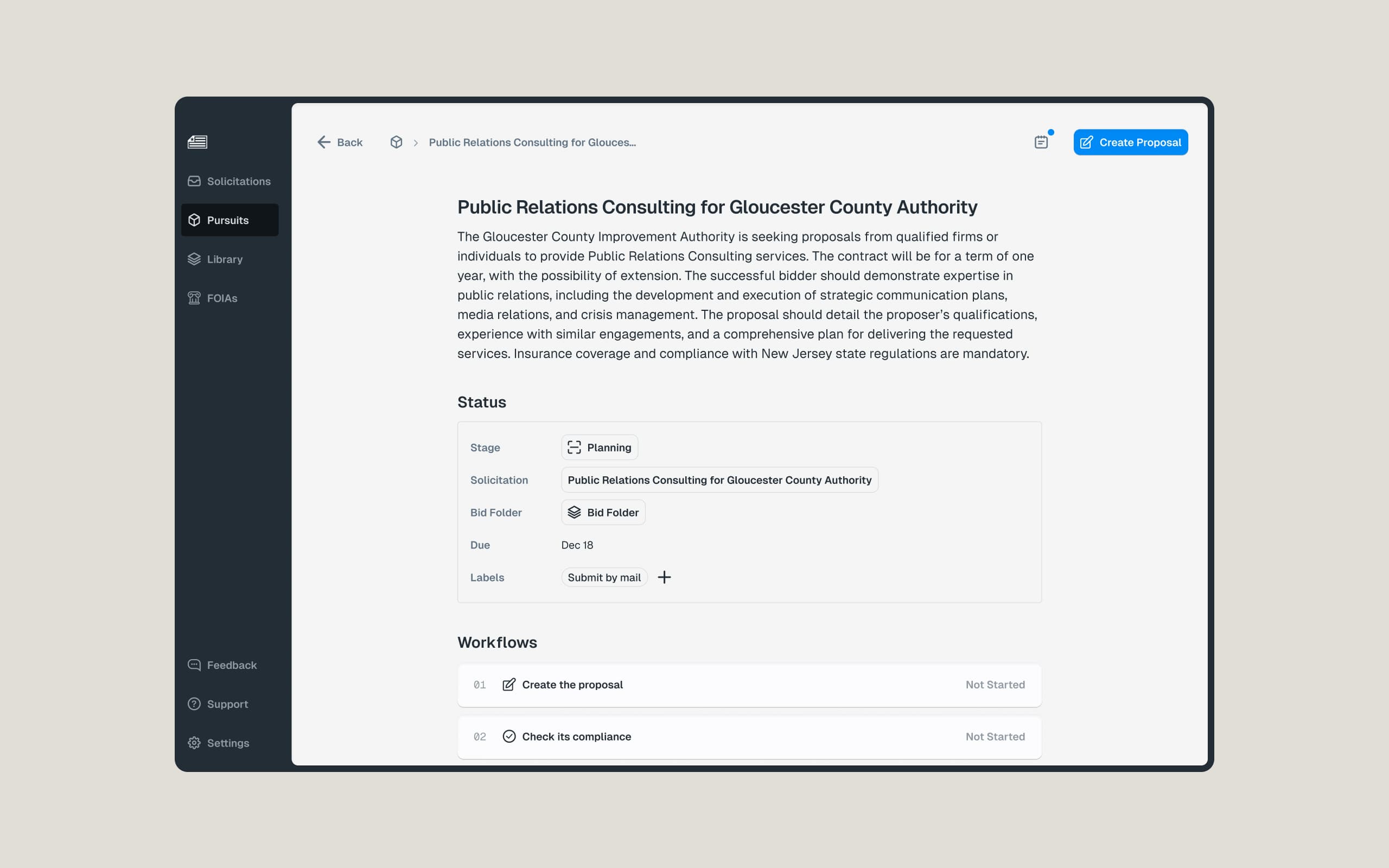
We redesigned the product from the ground up: clearer structure, better legibility, more obvious workflows, a visual language that signals competence and calm.
Before
After
There’s a Charles Eames quote I think about often during this work: “Innovate as a last resort.”
JustWin’s customers don’t live inside the app the way people live inside Figma or Slack. They dip in, do focused work, and leave. The cognitive load has to stay low. That means clarity over cleverness, familiar patterns over novel ones, and interfaces that feel obvious to people with median technical comfort.
When a legacy competitor had solved something well, we borrowed the pattern. When a skeuomorphic touch helped users orient, like making an AI-generated summary feel like the paper document that used to land on someone's desk, we used it. The goal was never to impress. It was to disappear.
Agentic proposal writer
Agentic proposal writer
Agentic Proposal Writer
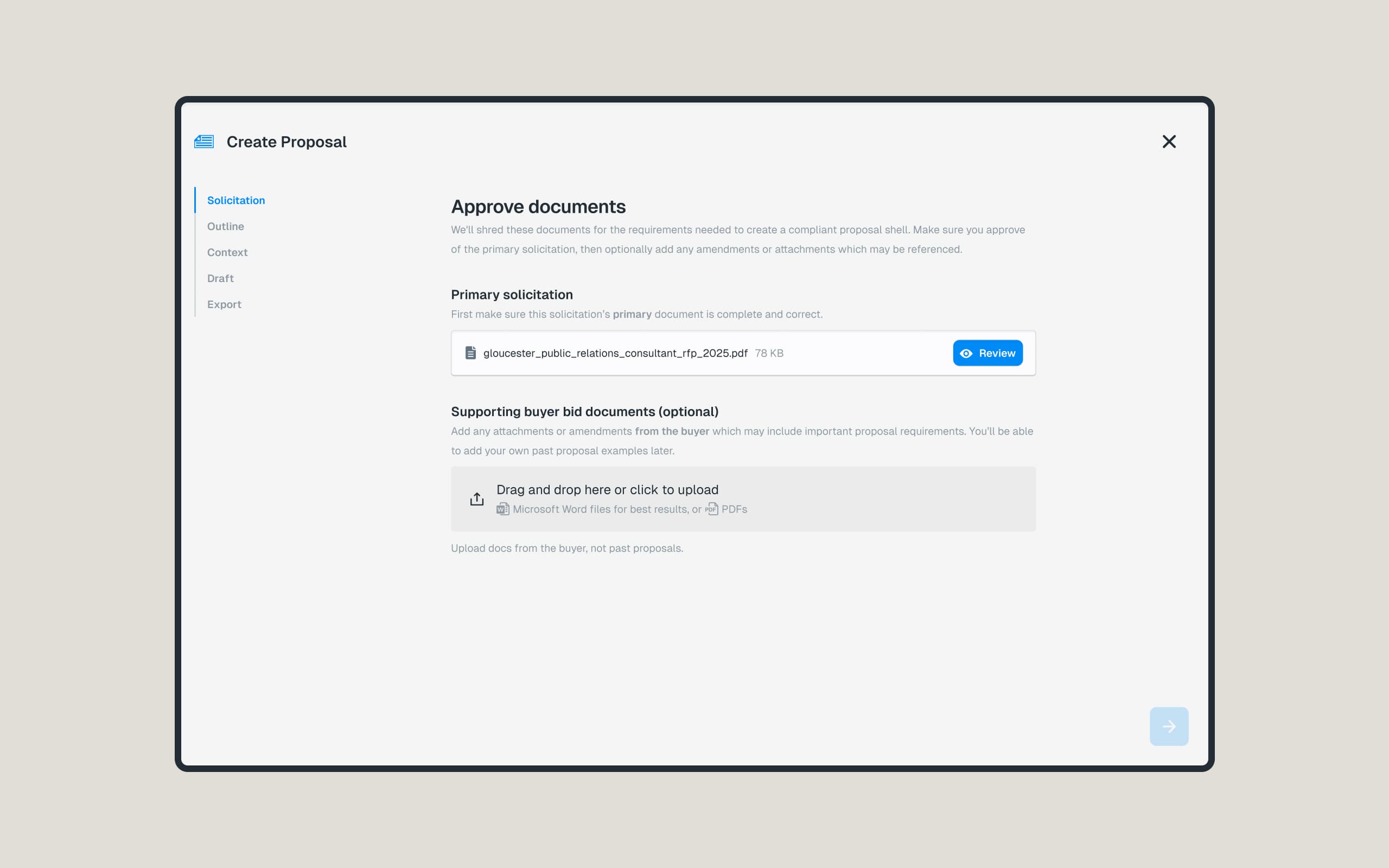
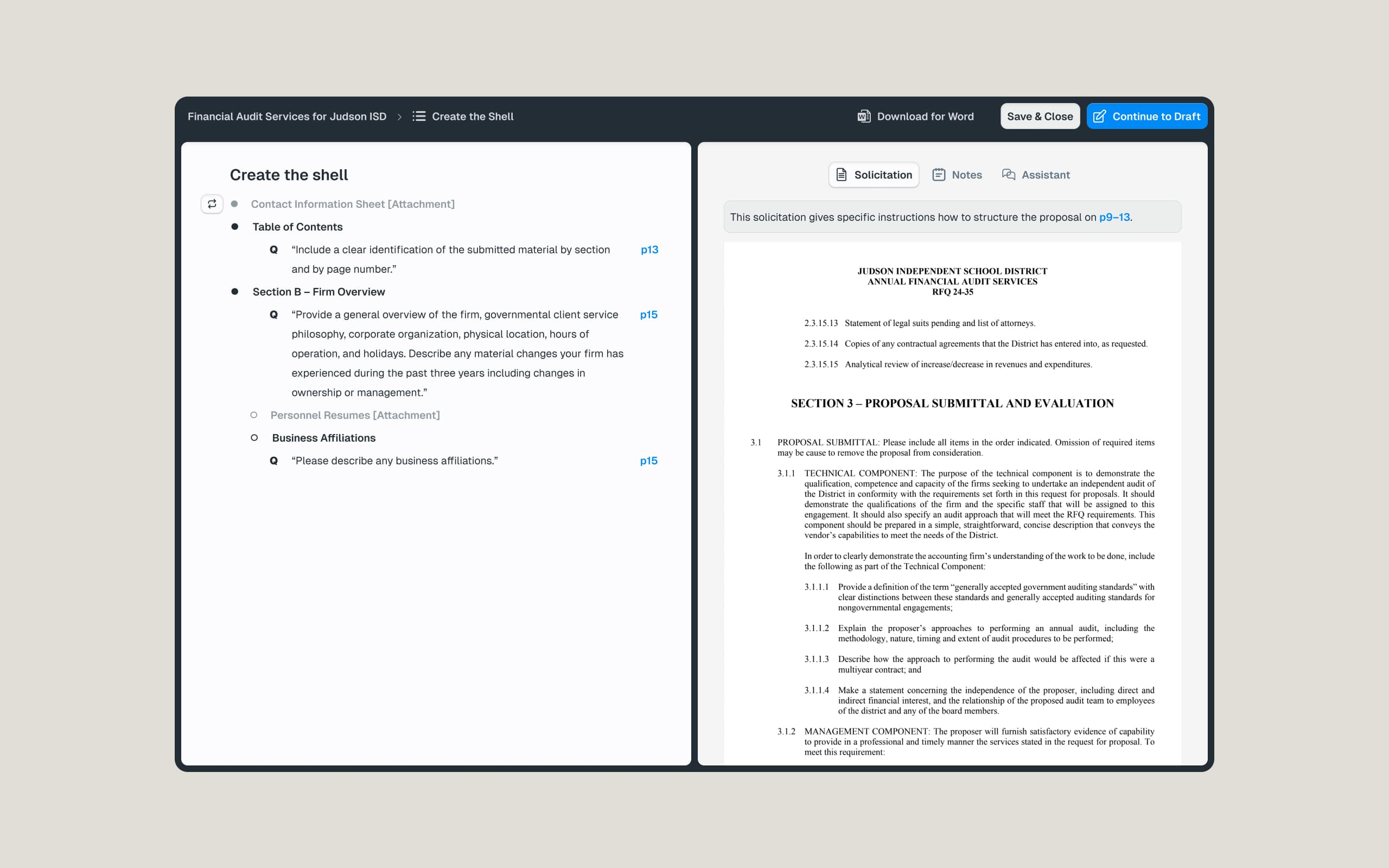
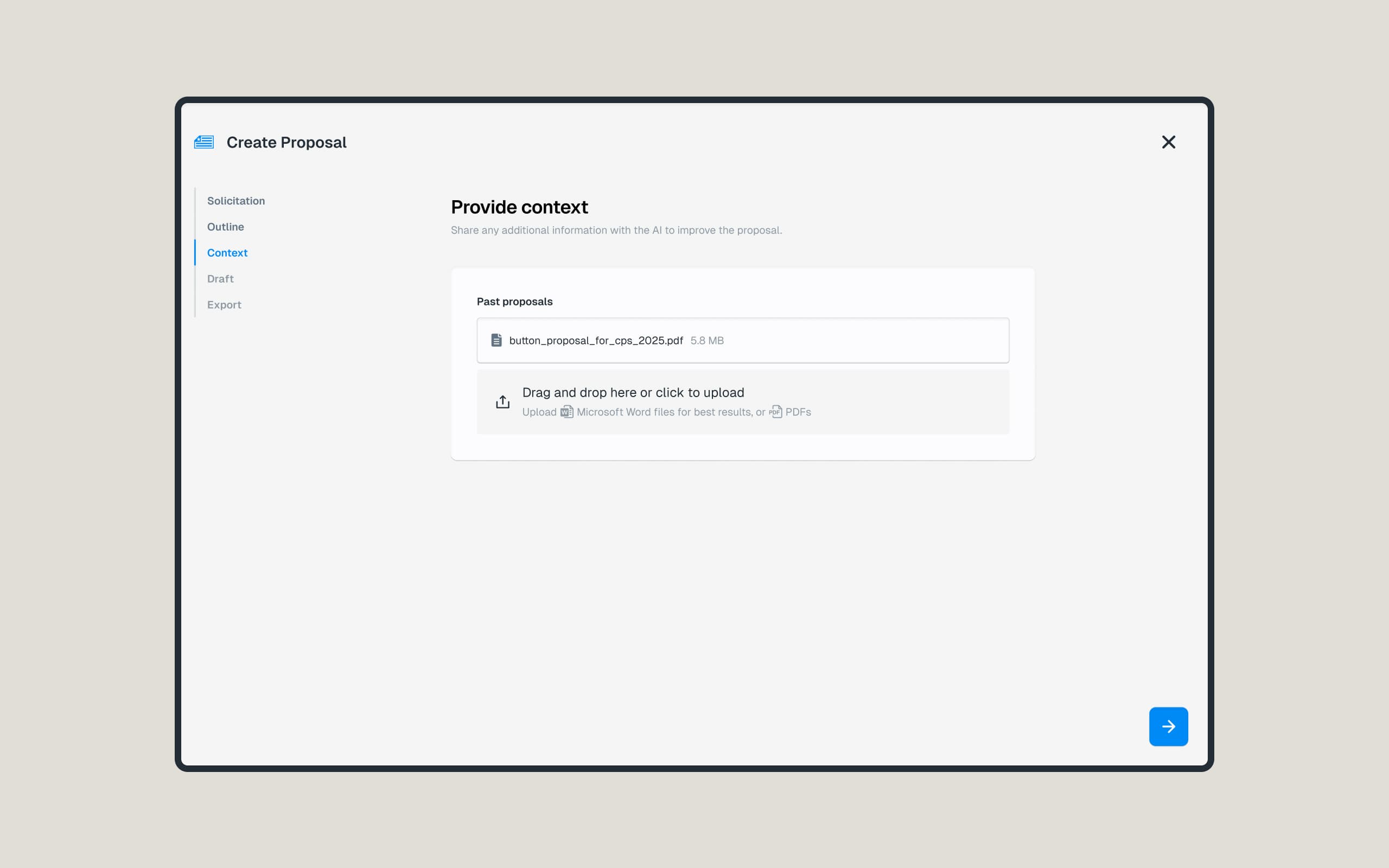
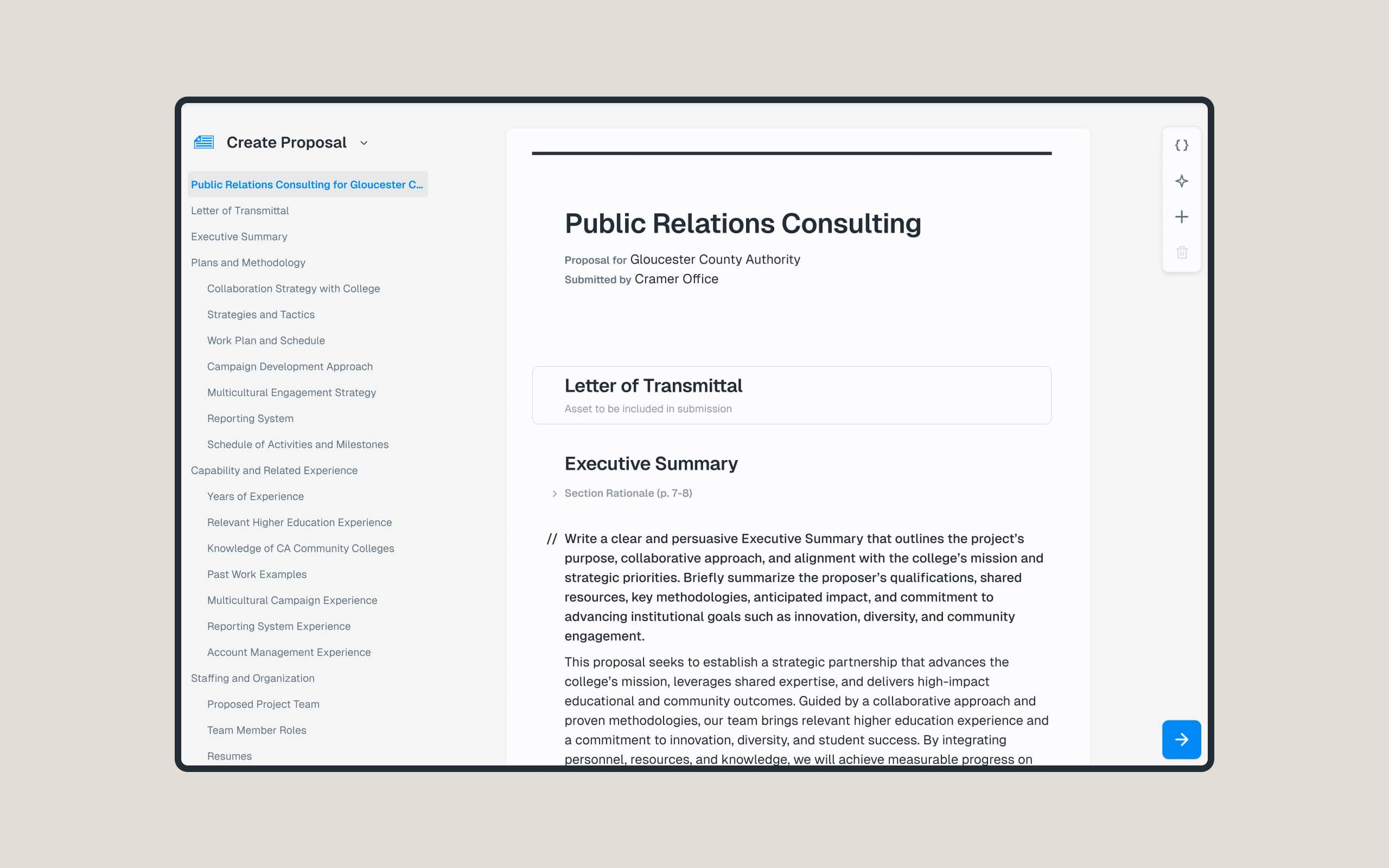
Defining the interaction model for AI-assisted proposal writing
I helped the team design the first version of their AI-powered proposal creation tool. This is now central to JustWin's value proposition.
This was early-stage product work: defining the interaction model, figuring out how much to automate versus leave to the user, and making the AI's output legible and editable. The challenge was giving users enough control to trust the output while removing enough friction they'd actually use it.
Roadmap design
Roadmap design
Roadmap Design
Turning customer development into features that drove real growth
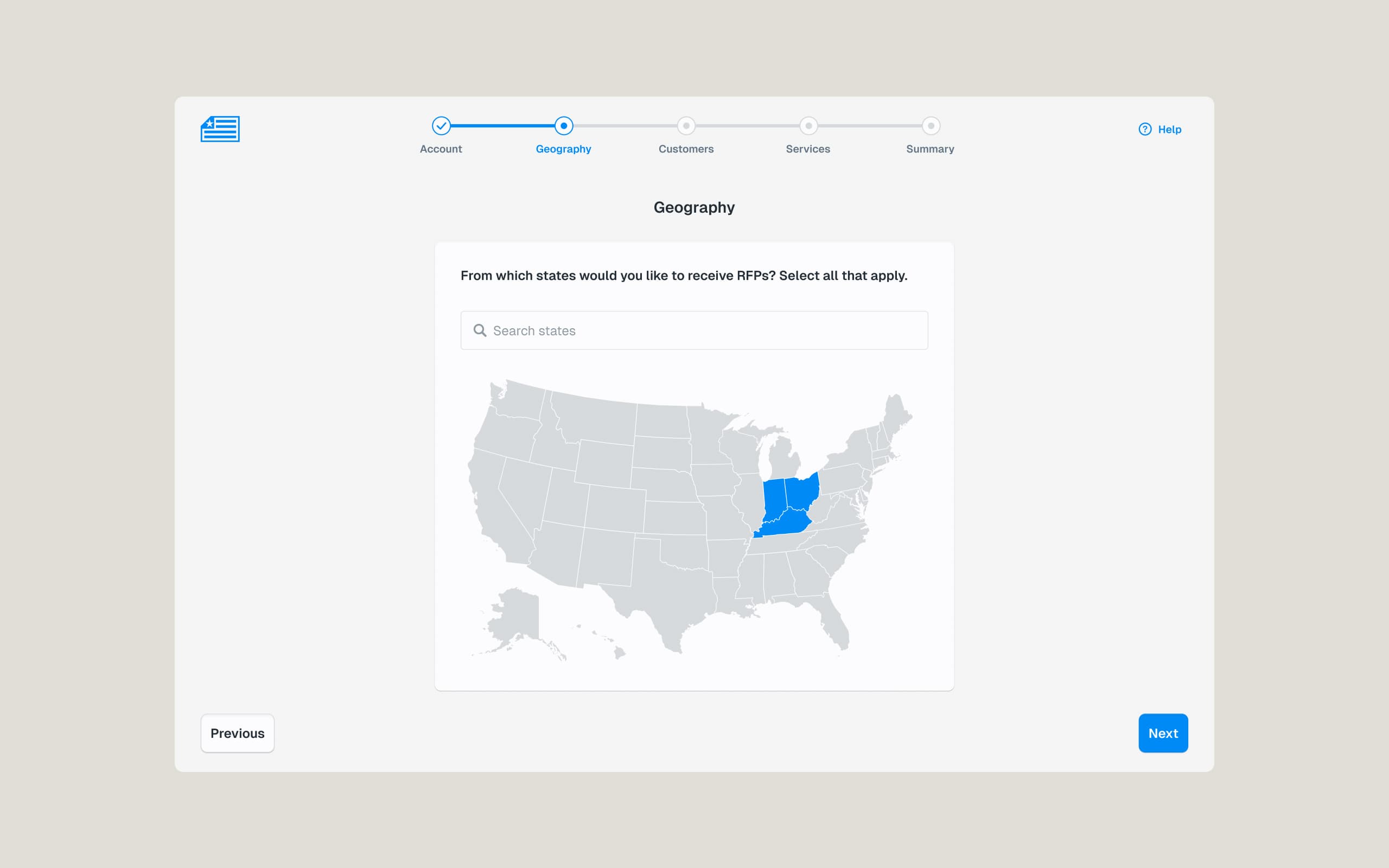
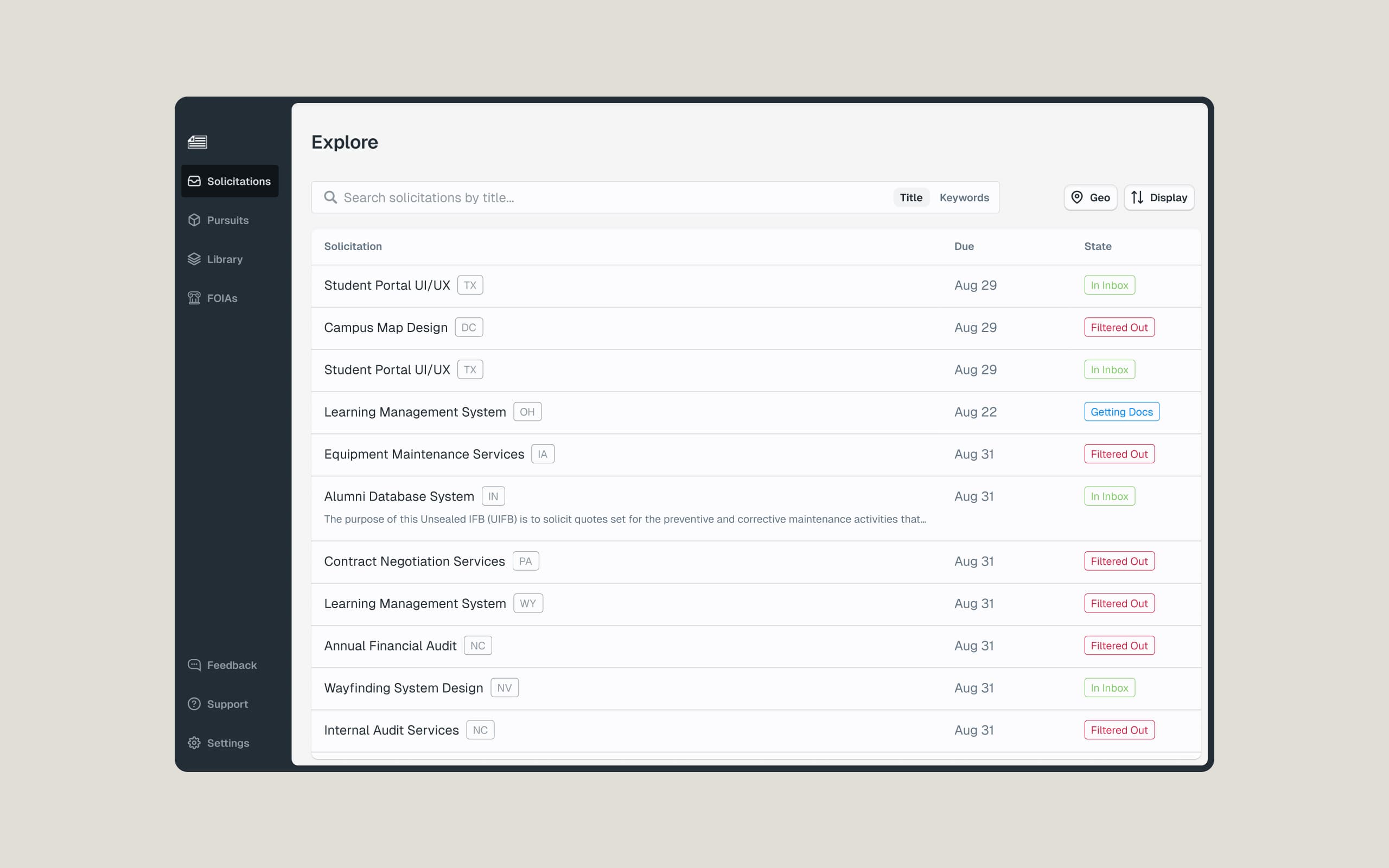
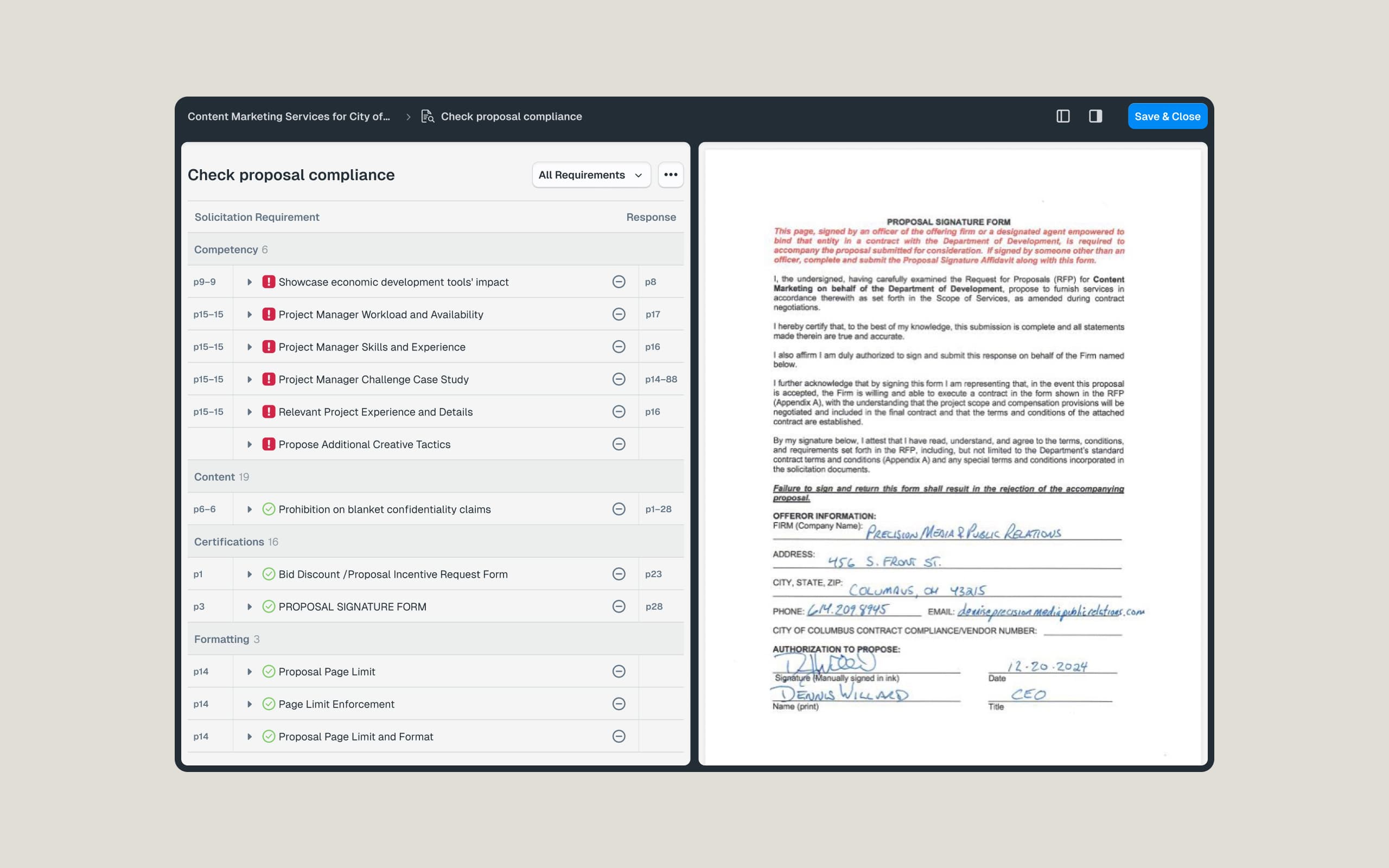
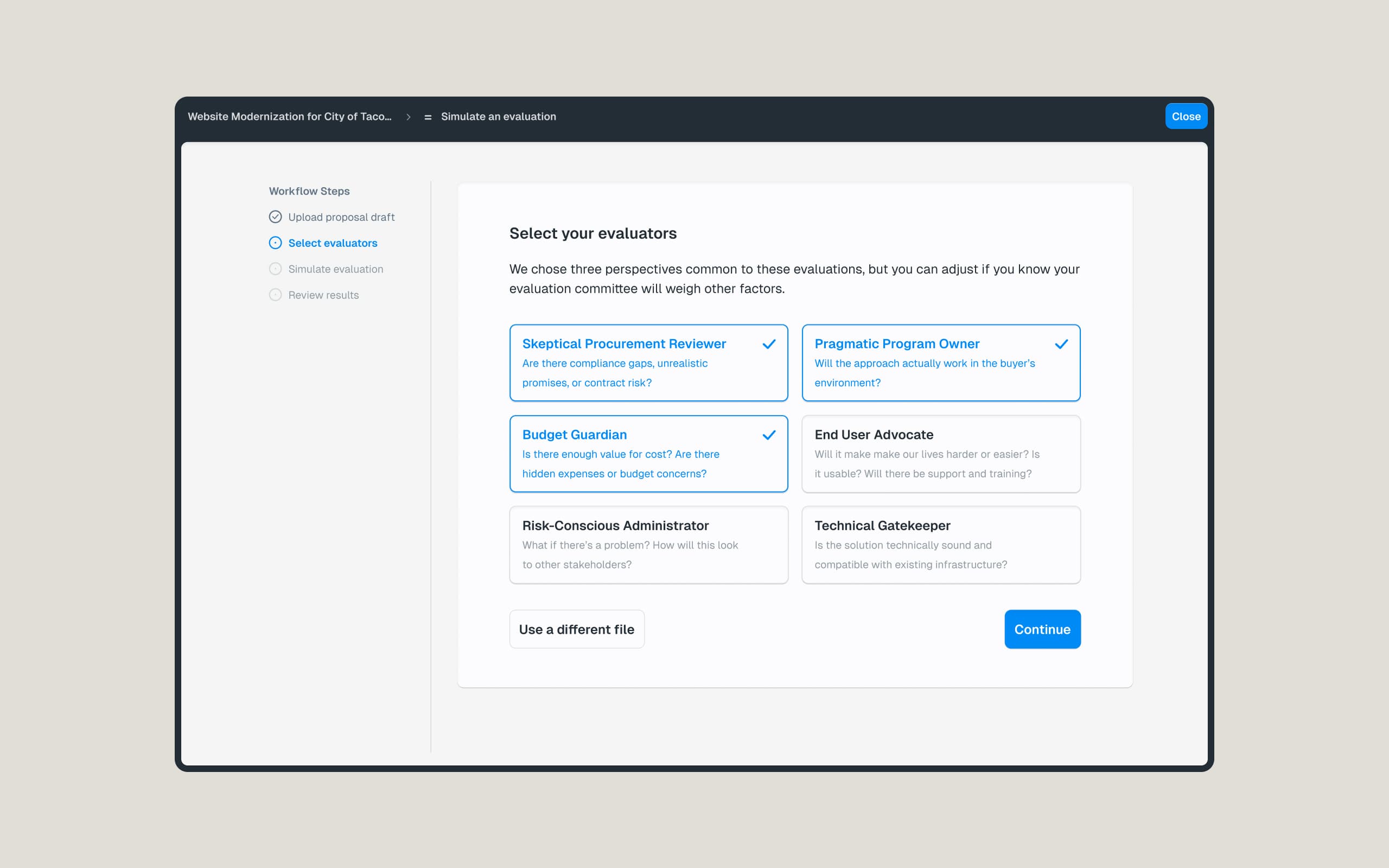
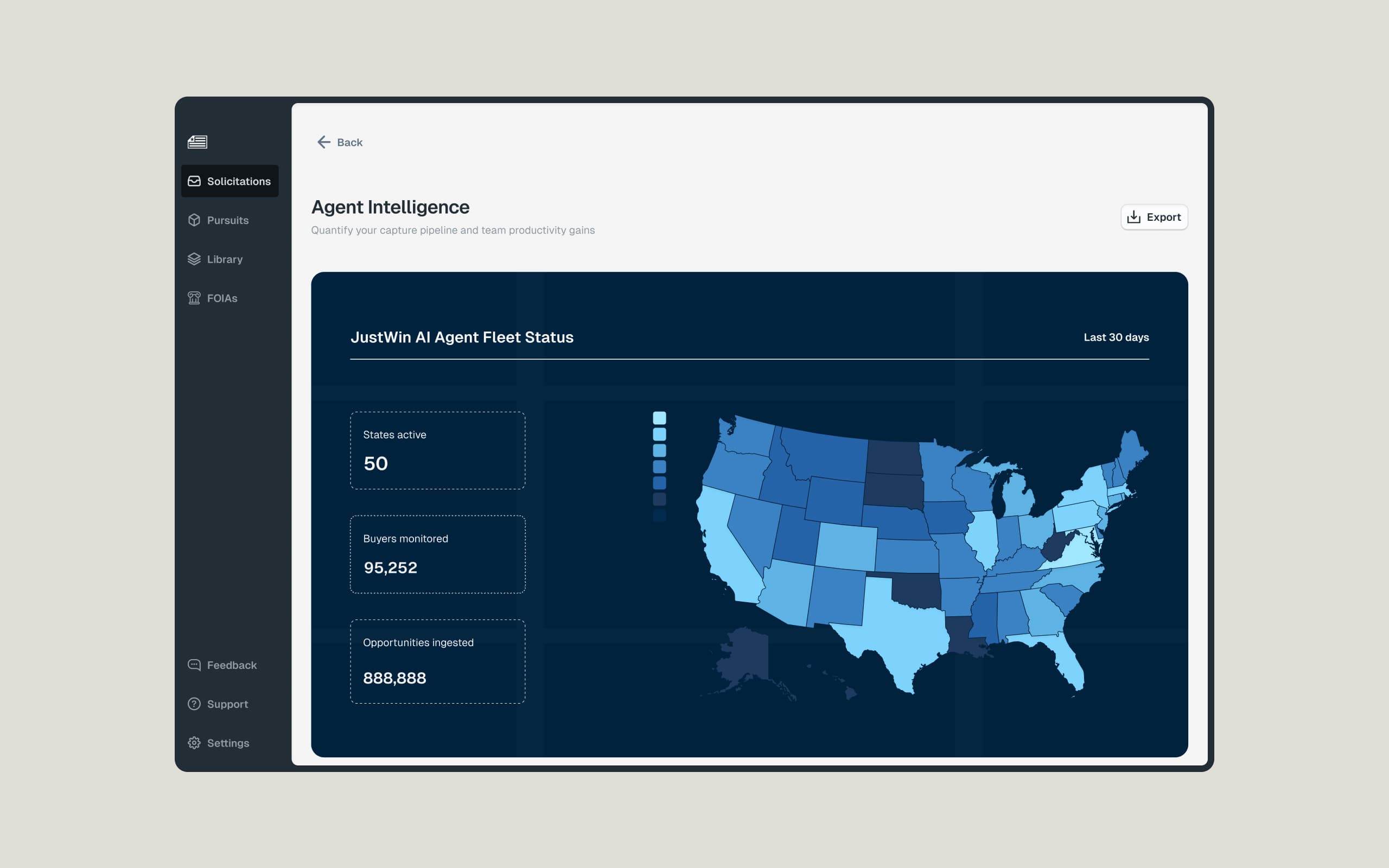
High-touch sales and customer success give the team unusually rich insight into what customers actually need. Together we've designed and shipped features designed around real customer problems:
- New onboarding flows and product tour to reduce time-to-understanding
- Explore view for browsing the firehose of open solicitations
- Refinements to the lead inbox where teams triage opportunities
- Continued iteration on the core proposal-writing workflow
- LLM-powered proposal compliance checker with a flexible panel layout
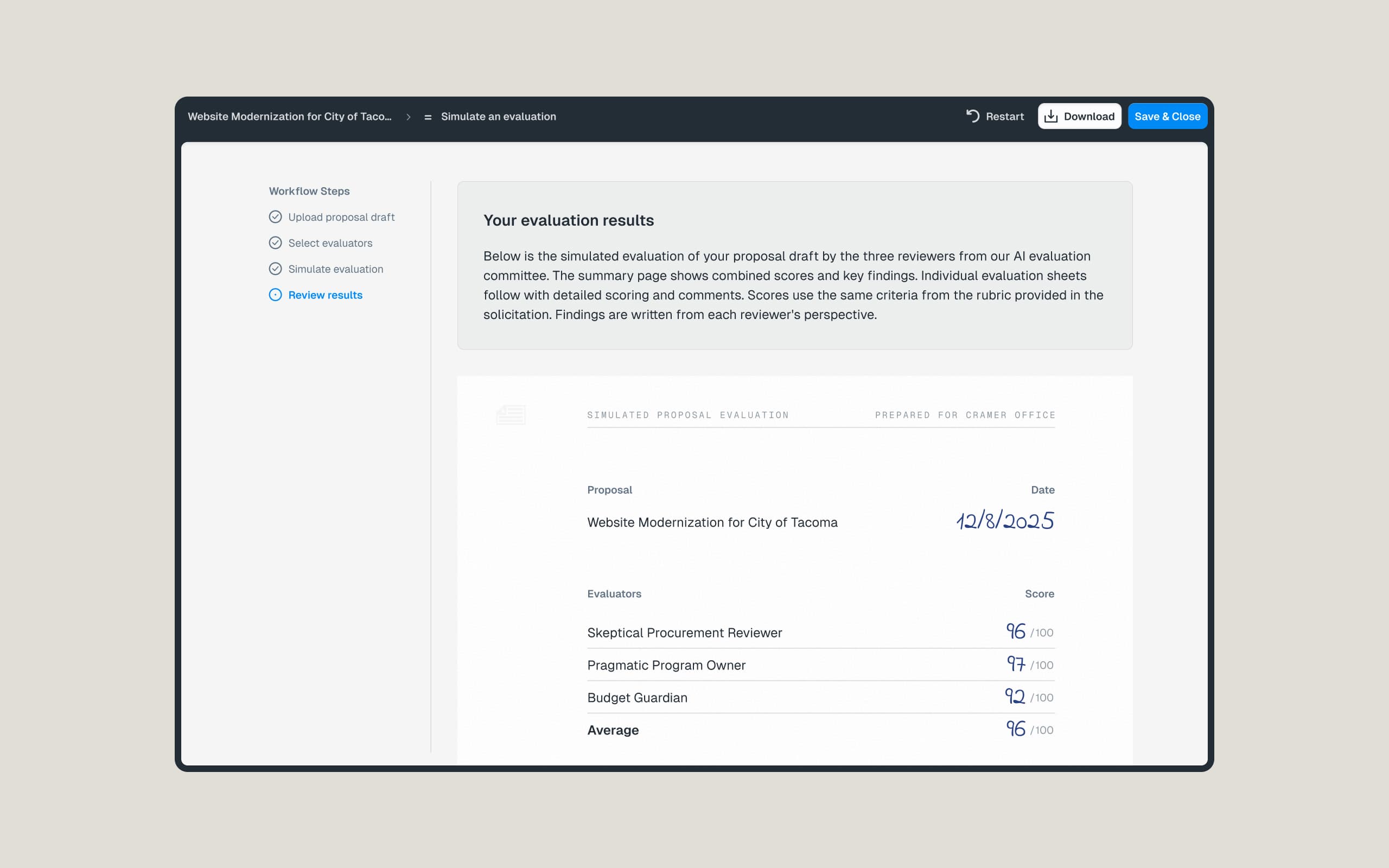
- Simulated evaluation where AI reviewers with different personas score a draft proposal
Design system
Design system
Design System
A Figma library of components and patterns that keep working when I'm not in the room
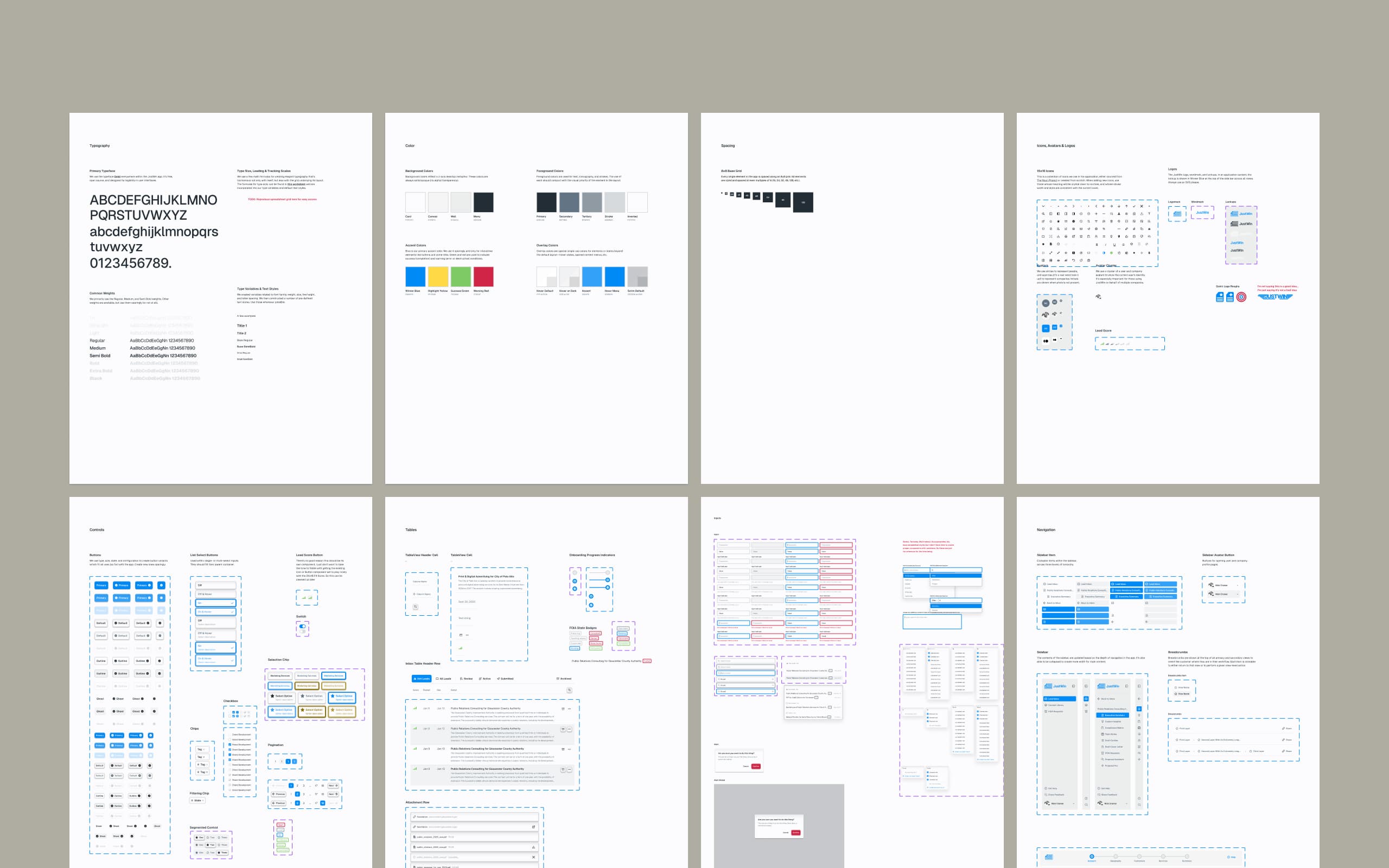
I built JustWin's first design system in Figma. It's a library of components, patterns, and variables the whole team can use. Its impact isn't immediate, but it does compound. It has meant faster feature design, fewer one-off decisions, and more consistent implementation quality across the product.
UI engineering
UI engineering
UI Engineering
Closing the gap between design and implementation (when it makes sense)
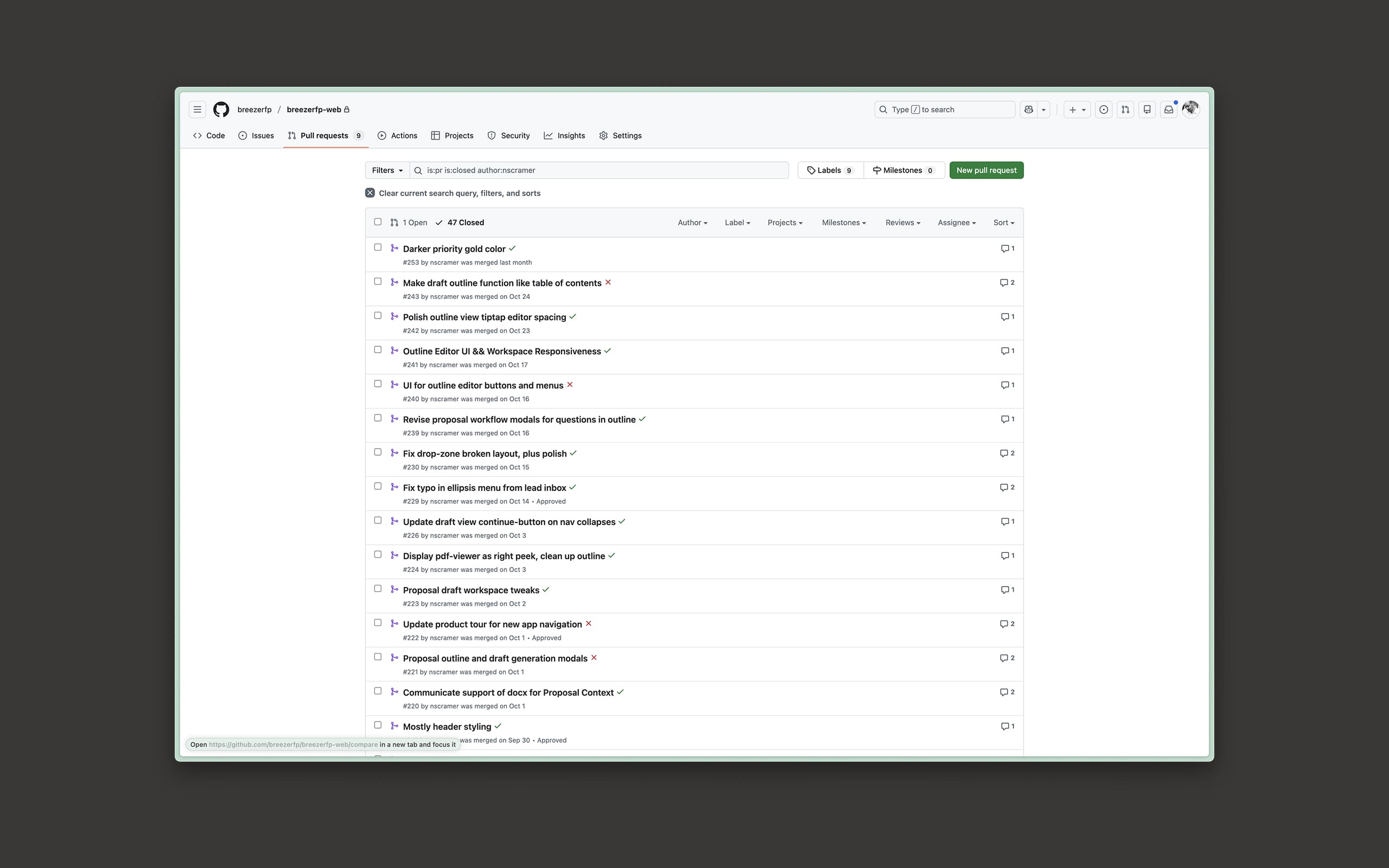
I also write some front-end code so when the (real) engineers are focused on higher-leverage work and I can ship something well, I step in.
That's included building a split-screen workflow for the proposal checker, fixing UI bugs, and doing polish passes in feature branches before merge. It keeps things moving and helps to keep the design intent intact through implementation.
Impact
Impact
Impact
They've seen significant growth and glowing reviews since we began working together
Metrics
MRR increased 10×
Pricing increased 66%
Only 1 additional hire needed
Customer remarks
"All in all, it is the easiest, most well put together platform I have used."
"Super in love with the interface."
"She [customer's new hire] can intuitively pick it up and I don't need to explain what to do. This is a massive win for our team."